
04 / Live music & television
From the live room to the national screen.
Promoters, managers and television producers explored China’s changing performance economy—and why a distinctive artistic voice still mattered more than a short-lived spike in attention.
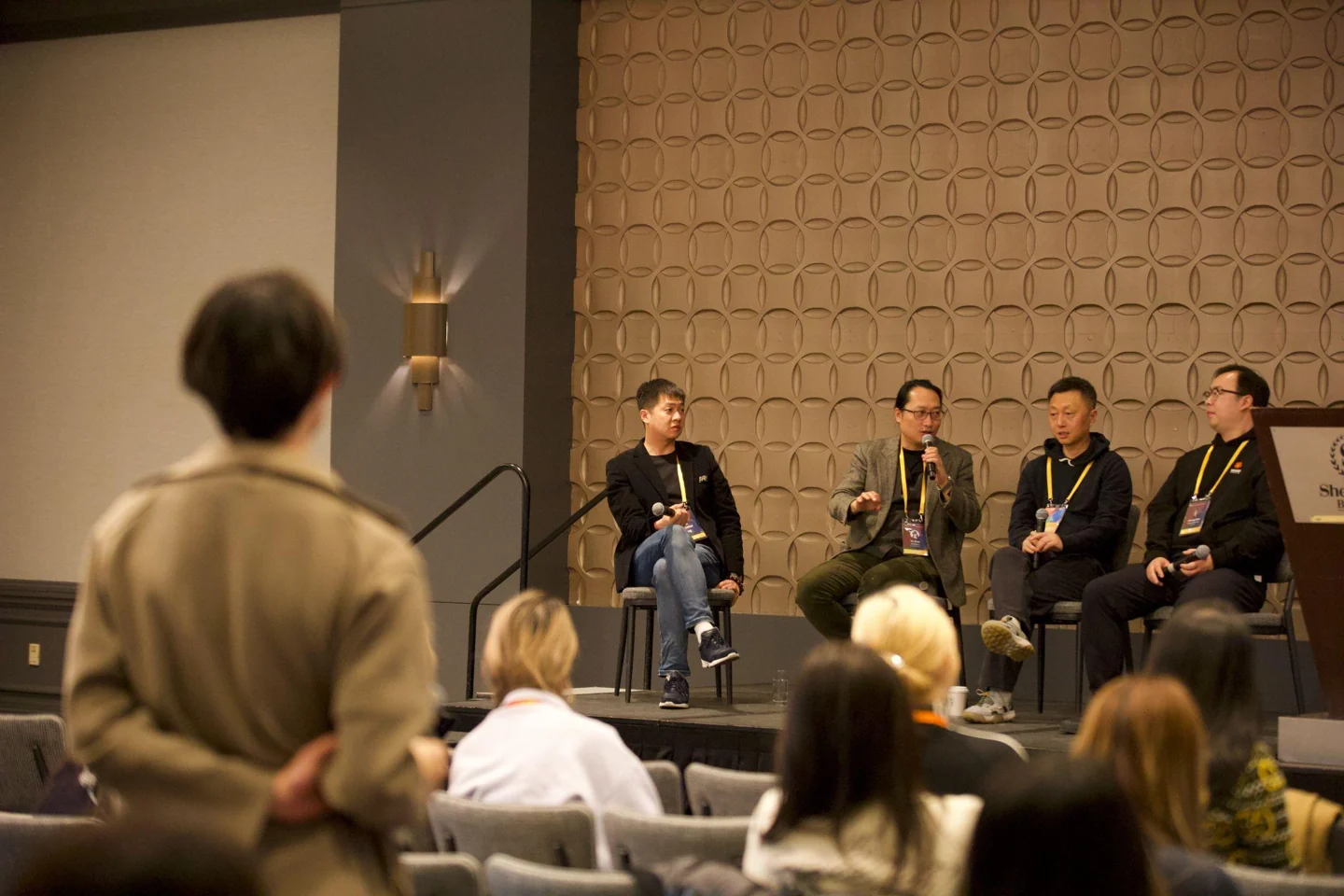
An industry seen from the stage and the screen
AMIF 2025 brought together creators, technical innovators and industry practitioners under the theme ‘I AM IFs.’ Within that wider programme, the live-performance and variety-television sessions examined two powerful ways music reached audiences in China: the physical experience of a show and the shared cultural moment created by a television programme.
The live-music discussion featured Wei Shan, co-founder of Midi Group; Zhong Ren, founder of Muhuo Tongming; Xiaoxiao Wang, CEO of Buyi Culture; and Ye Zuo, founder and CEO of OMNI Music. The television session featured director and producer Dikui Xie, known for programmes including Where Are We Going, Dad? and Wonderland.
A live market moving at different speeds
The speakers described an ecosystem in which opportunity and pressure coexisted. Small livehouses faced a higher threshold for entry: investment could be substantial while ticket sales remained uncertain. The number of venues in the roughly thousand-person range had expanded, creating intense competition among shows scheduled for the same weekends.
Music festivals followed another trajectory. Rapid growth after the pandemic had given way to a more selective market, with commercialization, similar lineups and repetitive promotional strategies becoming increasingly visible. Chasing traffic could make the market appear larger while leaving artists and promoters competing for the same attention.
Large-scale concerts, meanwhile, had benefited from renewed demand for in-person entertainment, supportive policy conditions and investment in venue infrastructure. Growth at that end of the market did not remove the difficulties elsewhere. The panel also considered the effects of capital entering the sector and the possibility that AI-assisted production could add to musical sameness.
Their response was to return to the substance of a live experience. A sustainable audience depended on good work and the ability to deliver it convincingly on stage, not simply on the size of a promotional campaign.
Work that holds up beyond the numbers
Digital platforms such as NetEase Cloud Music offered important routes for independent work to circulate. Yet the speakers argued that long-term development required attention to the complete artistic presentation: songs, live performance, album artwork, visual style and a coherent identity.
Market feedback could inform that work without becoming its sole purpose. The discussion encouraged musicians to look beyond constant measurement and concentrate on what made their expression distinctive.
Examples included Midi’s early combination of in-person community-building and online promotion, as well as the need for international artists such as Jessie J to communicate in ways that made sense within China’s social-media environment. Cultural grounding and local adaptation were presented as complementary, not competing, concerns.
When a theme song becomes a life of its own
Dikui Xie’s television discussion focused on the relationship between music and a programme’s identity. An effective song could become a recognizable part of a show while also travelling beyond it into everyday listening.
He used the theme from Where Are We Going, Dad? as an example. Composer Ye Shengtao created the music, and the programme’s celebrity participants sang it themselves. That approach kept the song closely connected to the show’s personalities and emotional tone while controlling production costs.
The result, as described in the session report, exceeded the immediate needs of the programme: the theme became a memorable cultural reference and continued to circulate in karaoke settings. Similar approaches in programmes such as Wonderland invited participants into the songwriting process so that the music could reflect the character of the show.
Xie’s emphasis was on the relationship between music and content rather than the size of the budget. A song worked when it extended the programme’s storytelling, strengthened audience memory and still had enough character to be heard on its own.
A practical foundation for a lasting career
Across both sessions, the advice returned to patient professional development. People working behind the scenes could build understanding through entry-level roles and practical experience; international placements could broaden that perspective. Artists needed time to develop an individual voice and enough commercial awareness to connect that voice with listeners.
The discussions offered a grounded response to a crowded market: make strong work, learn from the live room, understand the context in which audiences encounter music, and build from there.