
05 / Markets, marketing & making hits
Beyond a breakthrough: how music travels.
Four conversations connected release planning, label strategy, Korean market entry and collaborative songwriting into a detailed account of how artists move between audiences and cultures.
The work between making music and being heard
For many musicians, the ambition was straightforward: make something that reached people and became part of their lives. The path was less obvious. Music education often concentrated on artistic skill, while release planning, audience development and the professional work behind a career remained harder to see.
AMIF’s ‘breaking through’ programme addressed that gap through four conversations. Christine Su and Jiacheng Wang discussed music marketing in China. Jaco Zhang and Chris Wares considered Chinese label strategy. Hye Rim (Leslie) Cho and Ralph Jaccodine examined the movement of artists into Korea and the movement of Korean music outward. Jae Chong and Valerie Orth explored the writing and collaboration behind songs that crossed markets.
Music marketing: a release begins before release day
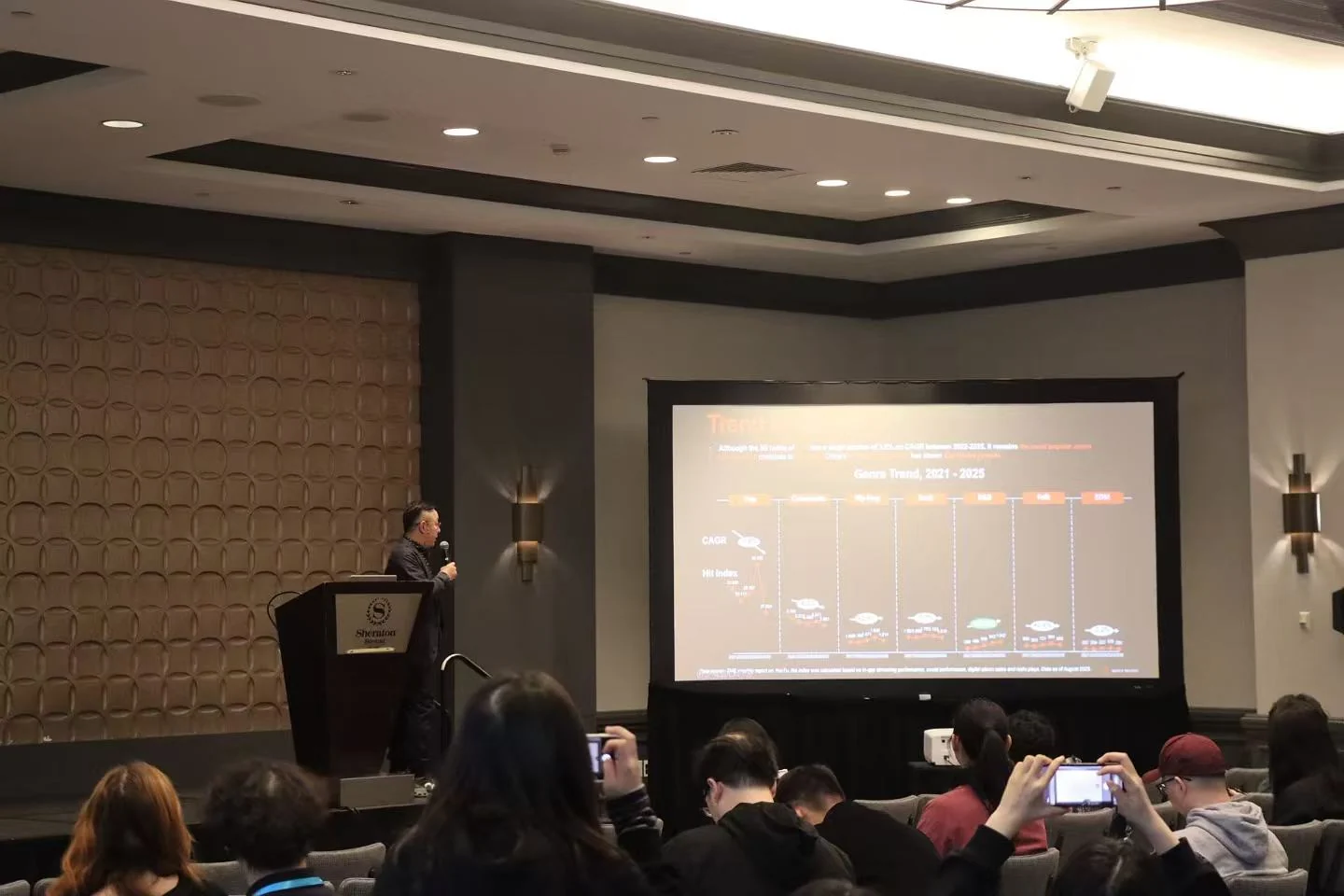
Christine Su, A&R and Client Development Lead for Greater China at Symphonic Distribution, joined music producer Jiacheng Wang to discuss the relationship between promotion, distribution and artist participation. Their account emphasized three areas: connections with variety television, a planned release sequence and the artist’s willingness to work with the campaign.
The Chinese report recorded a planning framework of four to six weeks for marketing and two to four weeks for a promotional proposal. The point was that artists needed to finish their music early enough for the people around it to prepare advertising, platform campaigns and other coordinated activity.
Variety programmes, covers and traffic-driven promotion remained influential parts of the Chinese market. The speakers described the importance of publicity and distribution teams working together, using resources in stages so that initial exposure could develop into a more durable connection with an audience. The discussion offered a practical way to think about a release as a process rather than a single date.
Label strategy in China: start with the artist
In a conversation moderated by Chris Wares, Jaco Zhang placed artist positioning at the beginning of label strategy. A team first needed to understand the voice, musical direction and characteristics that distinguished an artist. Those decisions helped define the repertoire, audience and choice of platforms.
Discovery could happen through internal A&R work, recommendations, demos from students at institutions such as Berklee, livehouse performances, showcases and competitions. Variety television could also function as a testing ground, bringing an artist’s public response into view.
Zhang contrasted a more company-led Chinese model with a more dispersed, individually driven American model. In the Chinese system he described, a label could coordinate development, image, marketing and performance resources. In the United States, independent releases and social visibility could play a larger part in an artist’s early momentum.
Television opportunities also carried business conditions. The report described exclusivity and multi-year management arrangements that could accompany advancement in some programmes. Zhang’s emphasis was on preparing for those conditions, including the relationship between management, ownership of work and release rights, rather than considering exposure in isolation.
He discussed how a strong demo might lead to interest in a song, an artist or a longer-term relationship. Smaller labels could sometimes take risks that larger companies approached more cautiously. For students working between China and the United States, he encouraged attention to Chinese-language writing and local listening habits rather than assuming one body of work would fit both markets equally.
Social media sat at the centre of the promotional system he described. Artist managers and marketing teams worked on visual content, release timing and the overall public presentation. International artists entering China likewise needed to understand local platforms. Across these examples, clear identity and local knowledge mattered as much as access to a large company.
Korea and the world: relationships before shortcuts
Ralph Jaccodine’s conversation with Hye Rim (Leslie) Cho examined the professional and cultural work behind international marketing. Drawing on approximately fifteen years of experience, including work with Sony and Universal, Cho described the resilience required to handle conflict, communicate clearly and keep projects moving.
She contrasted the early international expansion of Hallyu, when television and radio exposure in markets such as Japan, Singapore and Malaysia played a major role, with a later environment shaped more heavily by social platforms. The growth of YouTube and Instagram after the pandemic required companies to reconsider how they reached fans.
Artist development, she argued, needed to begin with both the artist and the audience. In discussing examples including Laufey, she stressed the combination of sustained investment, relationships and timing behind apparent success.
Cross-border marketing also demanded cultural knowledge. A team needed to understand local sensitivities and the partners who could connect an artist to media, venues and audiences. A Korean artist seeking a wider American audience first needed a committed base of fans; Cho described a year or more of continuing work as a more realistic starting point than an immediate breakthrough.
She recalled concentrating substantial departmental resources on introducing Lady Gaga to Korea through showcases and exposure. The lesson was not simply to spend more, but to turn scattered opportunities into a coherent plan and give a chosen strategy enough support to work.
The hit-song conversation: trust, flexibility and musical range
Jae Chong joined Valerie Orth in a hybrid conversation about production across Asia and the United States. Chong described a musical background shaped by rock, new wave, hip-hop, R&B and the electronic pop of the 1980s. Church-band experience, learning instruments and experimenting with early arranging software all contributed to his development.
He encouraged producers to listen widely. Repeatedly studying film scores could reveal arrangement choices, while familiarity with different musical traditions expanded the range of ideas available in a session. Technical facility mattered, but so did a broad musical vocabulary.
Collaboration was central to his account of strong songs. He distinguished the natural exchange between friends from more structured, label-organized collaborations. Both relied on trust, flexibility and sensitivity to the artist’s personality. An idea did not have to remain fixed simply because it appeared early in the process.
He contrasted earlier, more clearly separated industry roles with contemporary writing camps involving many contributors. The latter could be complicated, but they also made unexpected combinations possible. The task was to preserve a productive exchange rather than treat the first plan as final.
AI, human feeling and the route into a new market
Chong compared AI with earlier tools such as drum machines and MIDI. He described using it for demo vocals and instrumental simulations, especially when working remotely. At the same time, he questioned what happened when rapid generation produced an abundance of similar songs.
The report recorded his example of quickly producing a Paramore-style song with AI and finding little emotional satisfaction in the result. That experience led him to consider whether increasingly automated production might renew listeners’ interest in music whose human character was more directly apparent.
Looking back on the formation of Solid, he described friendships and collaborations that developed from a college social setting before a Korean company became involved. His account connected international movement with local creative communities rather than a single formula for exporting music.
For Asian artists entering the United States, the advice was to retain cultural character and emotional substance while staying flexible about how the work reached listeners. For newcomers, he encouraged taking workable opportunities instead of waiting indefinitely for an ideal agreement, building experience through music-related jobs and spending time with creative peers.
A connected view of a musical career
Together, the four discussions showed that breaking through was rarely one isolated event. It depended on the relationship between a strong body of work, a clear identity, informed planning and persistent collaboration. Different markets called for different methods, but each required time, attention and people who understood the music they were helping to carry.