
06 / Artificial intelligence & music
New tools. Human intention.
Two AMIF conversations explored AI-assisted production, vocal transformation, creative identity and the responsibilities that came with rapidly changing tools.
Technology, practice and artistic choice
Artificial intelligence was one of the most actively discussed subjects at AMIF 2025. Rather than treating it as a single technology or a single argument, the programme brought together people working in research, product development, professional production and artistic practice.
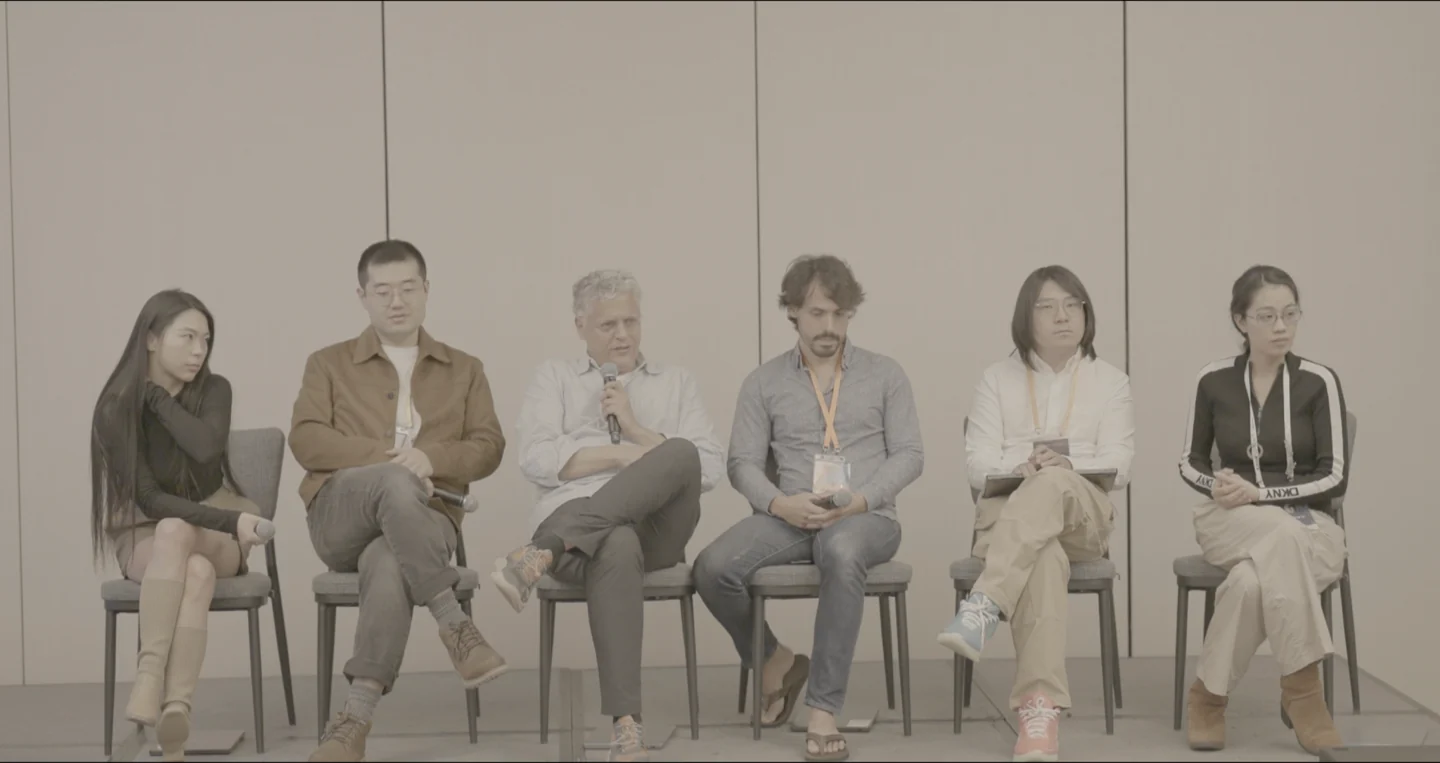
The creative-production session featured Sherri Hendrickson, Director of Partnerships at AutoTune; Coco Mao, CEO and co-founder of OpenArt; and Chris Wares of Berklee College of Music. A second conversation, AI + Music: Empowering, Not Overpowering, included Rafael Valle of Meta Superintelligence Lab, Helena Zhang of Fish Audio, Gil Weinberg of Georgia Tech, Xinyu Yang of Carnegie Mellon, Ziyu Wang of NYU and researcher, composer and artist Evelyne Li.
From a demonstration to a creative workflow
Coco Mao opened with an AI-generated video, using a visible example to begin the conversation about how quickly an idea could take form. The demonstration introduced a larger question: what could such tools make possible for an artist who did not have a large production team?
Hendrickson described AutoTune’s evolution beyond pitch correction. Tools could help a musician explore a sound or communicate an intention even when they did not have detailed knowledge of equalization, compression or every stage of audio production.
Her discussion of Metamorph covered vocal transformation, layering and experimentation with vocal range and character. Demo-making was one practical context: a songwriter could explore how a composition might suit a different voice before developing a finished recording. The report also recorded a discussion of potential applications for people who had lost their voice.
Ethics remained part of the same conversation. Hendrickson emphasized boundaries around voice training and AI model development. The programme’s central question was not only what a tool could generate, but how it could support creative work responsibly.
Learning the tools without surrendering the judgment
Across the discussions, speakers described AI as a way to lower barriers to music and video production and to improve communication among collaborators, including musicians and animators. They consistently returned to the idea of assistance rather than replacement.
The sessions encouraged creators to experiment, seek feedback from different people and remain involved in decisions about their work. OpenArt, AutoTune and ChatGPT were among the tools mentioned as accessible starting points in the 2025 conversation. Specific products were examples of an emerging workflow, not a definitive list of what every artist should use.
Writing an effective prompt was itself described as a skill developed through iteration. An early result did not need to be perfect to be useful: it could clarify an intention, reveal a limitation or give collaborators something concrete to discuss.
The deeper professional advantage, the panel suggested, was adaptability. Tools would continue to change. Curiosity, creative judgment and the ability to learn would matter beyond the life of any one product.
A visual identity before a thousand outputs
Audience questions brought the conversation back to the artist’s overall identity. In a media environment where music was encountered alongside images, video and social content, a recognizable visual language could be as important as a carefully developed sound.
The speakers proposed a practical foundation: a personal brand guide defining colour, typography, imagery and atmosphere. With those decisions in place, AI could help produce a range of material without making every output feel unrelated.
The point was to give the technology a clear creative framework. A musician who knew what they wanted to communicate would be better placed to assess the results, reject generic choices and maintain continuity across different formats.
The possibility of more responsive models was discussed in that context. Better tools might interpret an artist’s intentions more precisely, but establishing those intentions remained human work.
Keeping the conversation open
The two sessions connected possibilities in production and communication with questions of consent, identity and creative control. Researchers and founders could explain what was becoming technically possible; artists and educators could ask what made those possibilities meaningful.
For the musicians in the room, the outcome was a practical invitation to learn and experiment while retaining responsibility for the work. The value of AI was measured through the creativity it supported, not through novelty alone.