
02 / Film, television & sync
Where music meets the moving image.
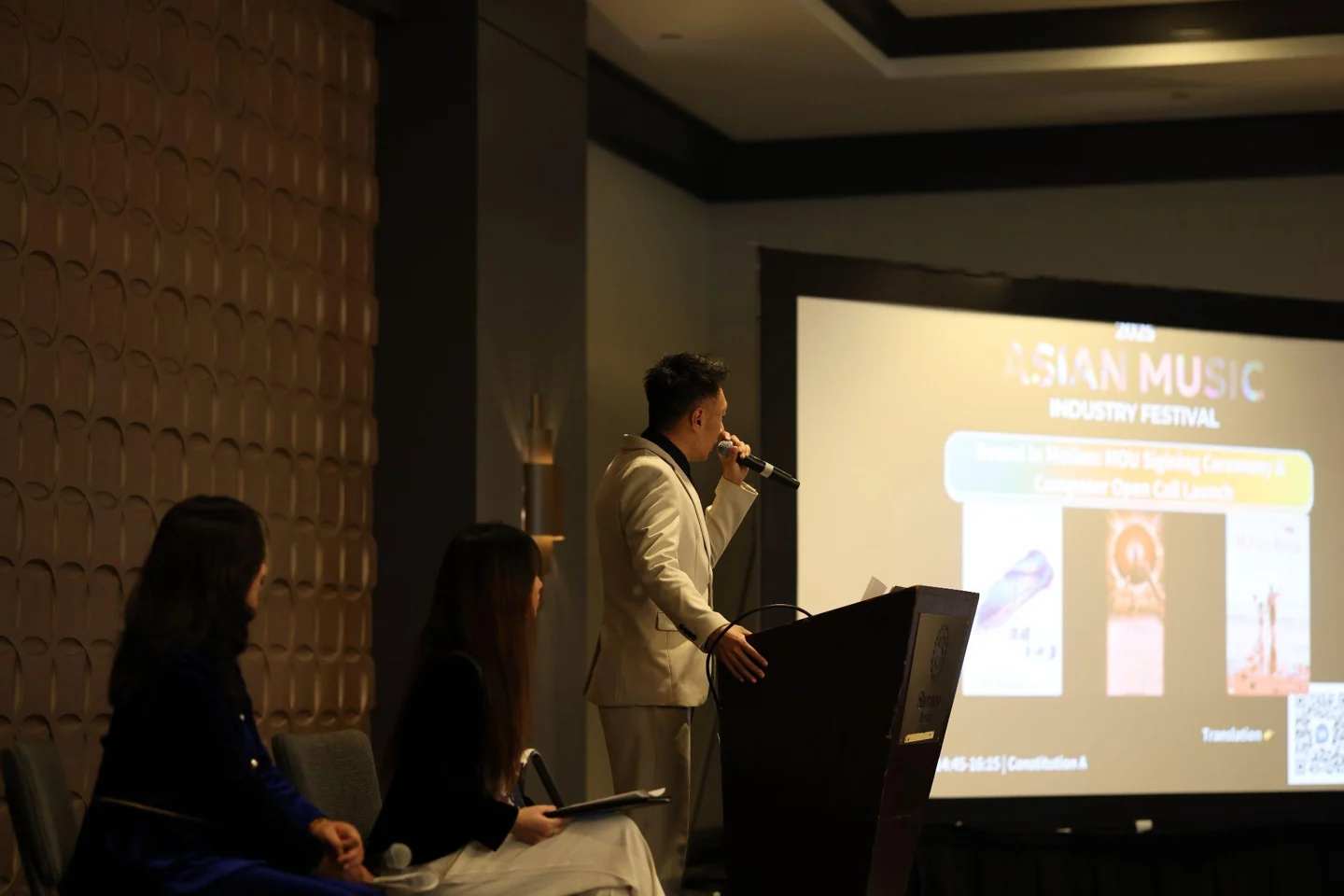
Three sessions traced the journey from a creative brief to screen, sync and international collaboration—including an MOU signing and the launch of a composer initiative.
Three perspectives on music for the screen
At AMIF 2025 in Boston, the film and scoring programme connected the artistic role of music with the decisions that brought it into a finished production. Three parts—Sync in China, Sound in Motion and Sync USA—brought together producers, music executives and filmmakers to discuss collaboration across disciplines and markets.
The sessions addressed a familiar gap for emerging musicians. Training could prepare a composer to make music, but it did not always reveal how a producer selected a cue, how a brand defined its needs or how a collaboration developed into a professional opportunity. The programme made those normally less visible processes part of the conversation.
Sync in China: understanding the people behind the brief
The China-focused discussion featured Yi Zhao of HS Entertainment, independent producer Peng Li, and music producer Jiacheng Wang. Their work across projects such as The Hope, Where Are We Going, Dad?, Three-Body, Under the Light and The Captain offered different vantage points on the relationship between story and sound.
Music can support a scene’s emotional structure: it helps an audience inhabit a moment, anticipate a change or remember a character. But choosing that music also involves production schedules, creative priorities and the coordination of teams working in front of and behind the camera.
The speakers examined how a film selected music appropriate to a particular sequence and how television programmes used music to guide an audience’s response. By discussing those choices from the perspectives of an executive, a producer and a music producer, they gave musicians a clearer sense of how prospective collaborators thought and what mattered when an important decision was made.
The emphasis shifted attention from the familiar faces on screen to the less visible conversations behind a production. For composers and songwriters, understanding those conversations was part of becoming an effective creative partner.
Sound in Motion: turning a conversation into a working connection
The Sound in Motion session featured Shelly Yu and Yuming Zhang, identified in the festival’s Chinese report as the chair and vice-chair of the China Australia International Film Festival. Alongside their discussion of the film industry, the programme included the signing of a memorandum of understanding and the announcement of a composer selection initiative.
The festival’s concluding report described Yu and Zhang signing the MOU with AMIF’s two co-founders. Its purpose was to extend the exchange beyond the room, creating a route for film and music talent to connect across North America, Asia and Australia.
For GCAC, this was an important distinction: an industry gathering could offer useful advice, but it could also help form relationships through which future work became possible. The composer initiative was announced during the 2025 event; this retrospective records that announcement and does not constitute a current call for submissions.
Sync USA: creative work, usage and the business around it
The American-market session brought together Joyce Lin of Warner Chappell Music and Esthy, whose work spanned Accidental Entertainment and content production at Sony Music Entertainment. Their discussion approached music through the way it was created, used, licensed and connected to commercial opportunities.
For younger creators, the entry point into music might have been curiosity, personal passion or an unexpected opportunity. More accessible production tools had made starting easier, but the volume of new music also made being noticed more difficult. Once music became a profession, creators faced a second set of questions: how would their work be discovered, what made it useful to a particular project, and how could it produce sustainable income?
The speakers considered those questions through market experience, historical context and the practical realities of content production. Their contribution was to make the route from making a piece of music to placing it within a larger project more understandable. It also showed why an artist’s creative identity and an understanding of rights and usage needed to develop together.
A bridge between education and practice
Many participants came from universities and music schools. The sessions connected that educational foundation with a fast-changing professional environment, where the latest working methods were not always reflected in textbooks.
Across all three parts, a common thread emerged: creators benefited from experienced guides and peers who understood the same challenges. AMIF’s film and scoring programme gave those relationships a place to begin, bringing artistic questions, business decisions and international collaboration into a shared space.