
03 / Artist development
Building a career without losing your own voice.
A&R professionals and artist managers discussed the choices behind a sustainable career: identity, the right team, meaningful audiences and the relationship between independence and label support.
Two routes, many decisions
AMIF’s artist-development programme asked what it took to turn music-making into a career in the streaming era. It considered both a label-supported route, in which a company could help coordinate releases, image and performance opportunities, and an independent route, in which artists assembled the resources to bring their own work to listeners.
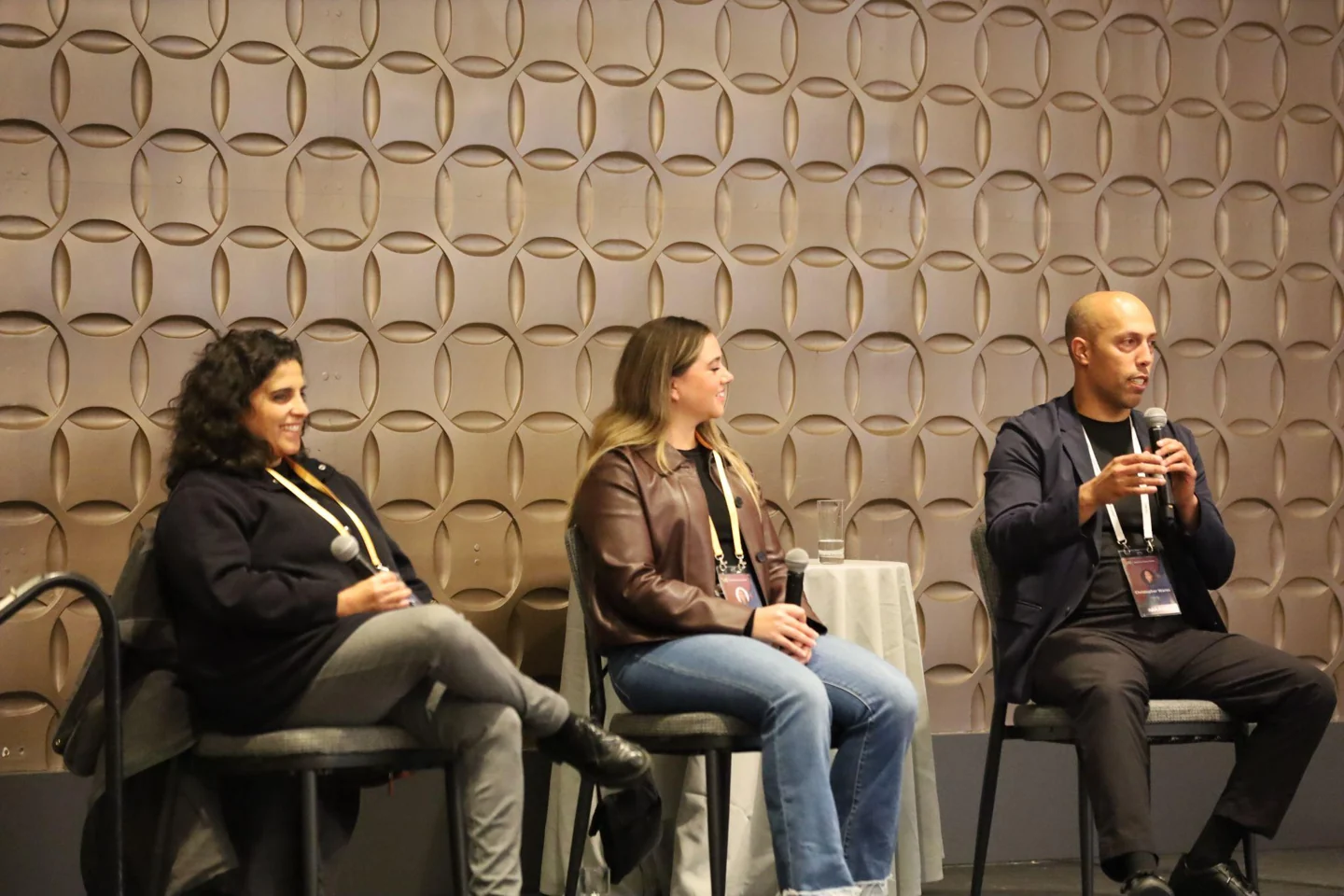
A&R Perspective: US Market Entry Strategy featured Gabi Kochlani, founder and Head of A&R at The Grey Administration; Shaugnessy Elsroth, A&R Manager at Sony Music Publishing; and Chris Wares of Berklee College of Music. Indie Artists Rising brought together Benjamin Ezaki of 88rising, Adam Moseley of Accidental Entertainment, Ye Zuo of OMNI Music and senior artist manager Ke Song of Wuyou Media.
What A&R listens for
The A&R discussion explained a role that connects creative talent with the needs and resources of a music company. Matching a song with an artist involved more than finding a strong melody: the music had to fit a voice, a sensibility and a broader artistic direction.
The speakers described a demanding listening routine. The report recorded an example of an A&R professional hearing at least 100 songs a day, with an initial listen of roughly 45 seconds per song. A song length of around three minutes and forty seconds was discussed as a common reference point. These observations illustrated the pace of decision-making rather than a universal formula for writing a successful song.
AI-generated demos formed part of that workflow discussion. Suno was cited as a way to try different styles and vocal presentations quickly before a song was pitched. One example involved a male songwriter preparing a female-voiced demo for a brief seeking songs for a woman artist. The practical value lay in helping an A&R listener imagine the match between a composition and a prospective performer.
The panel also encouraged artists to consider how they presented themselves through social media, including Instagram and Stories. Those channels could give an A&R professional a fuller impression of personality, visual identity and performance style than a single audio file.
Independence as a way of working
The independent-artist discussion began by reconsidering the word ‘independent.’ Once frequently associated with an alternative sound, it increasingly described an artist’s autonomy and business structure. The label alone did not explain how much support, investment or professional infrastructure stood behind a project.
The speakers contrasted a focused boutique team with the possibility of becoming one of many competing priorities at a large company. The more useful question was which arrangement could serve the artist’s work and stage of development.
Audience-building was an early priority. Short-form video, livestreaming and a recognizable personal identity could help an artist establish a base before moving into more ambitious live activity. The beginning was often the hardest phase because the artist was developing both the music and the means of reaching people.
Adam Moseley emphasized sustained, practical work. Growing an online presence required more than accumulating a moment of attention; the challenge was to give people a reason to return and to bring new listeners into that relationship over time.
An audience in one market is not automatically an audience in another
The panel cautioned against treating global exposure as a single measure. An artist might attract millions of views internationally while having only a small following in China. Platforms, cultural habits and the mechanisms that converted attention into participation differed from place to place.
Three digital channels discussed were livestream commerce, short-form content and variety programmes. The broader point was to connect online discovery with offline participation. A digital audience became more valuable to a performing artist when it could develop into a community willing to attend a show.
Yet positioning could not simply be assigned by a manager. The speakers returned repeatedly to a clear artistic identity. One interview question—asking which three artists a musician would choose to tour with—was offered as a way to understand how that musician saw their own work and audience.
Influence was natural; imitation was a different matter. The speakers argued that listeners could recognize a manufactured persona and that a lasting career required an artist to bring something of their own to the stage.
New tools, with the artist still at the centre
The closing discussion returned to AI. Panelists saw it as a source of additional creative methods rather than a replacement for artists. Demos and visual experiments could become less expensive, helping a new project explore possibilities before committing a larger budget.
They also discussed generating new material instead of relying only on existing recorded samples. The enduring comparison was with earlier tools such as samplers: technology changed the process, while the artist remained responsible for the choices and the final work.
By placing label and independent perspectives alongside one another, the programme made the trade-offs more concrete. Participants left with a clearer view of the teams, relationships and habits that could help them develop a career suited to their own music.